
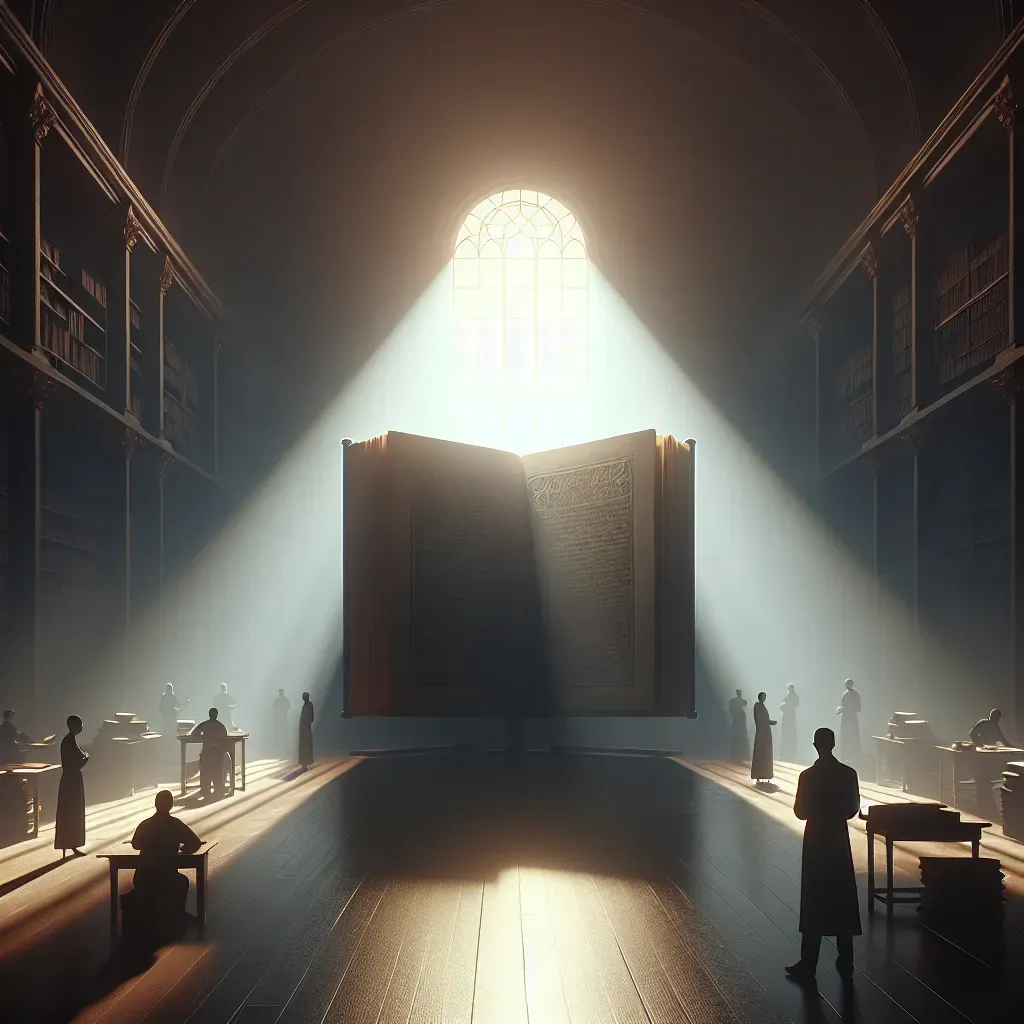
Cultural heritage finds itself at an ever-increasing risk of destruction. In recent years, we have seen distressing events unfold across the globe—wildfires ravaging museums and libraries in California, bombings in Gaza, and ongoing conflicts in Ukraine and Iran have threatened invaluable cultural assets. As these institutions face existential threats, the role of book scientists and heritage preservationists has never been more critical.
At the forefront of this endeavor are researchers employing groundbreaking technologies, including microscopes, multispectral imaging, and artificial intelligence, to recover and preserve ancient texts. This sophisticated approach not only sheds light on how historical books were created but also assists in safeguarding fragile collections that become increasingly vulnerable due to climate change and the surge in mass digitization.
One notable figure in this field is a PhD student at the University of Toronto, engaged in collaborative efforts within the Old Books New Science Lab and the Matrix Functionalization and Phenotyping Lab. His research focuses on parchment manuscripts, where innovative imaging techniques are utilized to explore preservation methods.
Throughout history, the concept of a “book” has evolved dramatically, taking on various forms shaped by local materials and technologies. From papyrus rolls and palm leaf manuscripts to clay tablets and animal skin parchments, books have manifested in countless ways. Each format holds unique insights into the cultures that produced them, from the pigments and inks used to the methodologies of creation.
A compelling application of advanced imaging techniques recently emerged in the restoration of a 13th-century Jewish manuscript at the University of Toronto. Multispectral imaging enabled researchers to capture multiple wavelengths of light to reveal faded, erased, or water-damaged texts that would otherwise remain obscured. This process brought a once-illegible work, affected by water damage, back to life, allowing scholars to engage with its content once again.
Researchers have recently demonstrated that examining texts through multispectral imaging can recover lost words and uncover hidden narratives in historical manuscripts. The Andrews Book Science Hub, for instance, employed 16 wavelengths of light successfully to reveal previously unreadable sections, giving these ancient texts another chance to narrate their stories while ensuring they remain protected.
Another fascinating aspect of book science is the study of collagen fibers in parchment, the organic material harvested from untanned animal skins that constitute many medieval manuscripts. Parchment possesses both durability and fragility; it is sensitive to heat, humidity, and light. Advances in microscopy provide researchers the capability to examine collagen at microscopic scales, allowing for early detection of deterioration. This invaluable insight aids conservators in determining which manuscripts require urgent attention, especially as climate change exacerbates adverse environmental conditions.
Moreover, artificial intelligence is transforming the way researchers interact with manuscript collections. AI tools are now being trained to transcribe challenging scripts and endangered languages found within these texts. Recent developments have seen tools capable of reading Geʽez, the classical language of Ethiopian Coptic manuscripts, thus bridging gaps between scholars and religious communities, making access to these works substantially easier.
The importance of these scientific advancements cannot be overstated. They serve not only to ensure the continuity of cultural heritage but also to remind us that books are much more than vessels for words. They are records of craftsmanship, trade, and human interaction, holding echoes of history that extend far beyond mere textual content.
In a world facing rapid changes, the practice of book science embodies a profound shift in our understanding of the past. It leaves open the possibility that future historical discoveries may arise not simply from the unearthing of new documents, but from reexamining ancient works with fresh perspectives and innovative technology. As we continue to push the boundaries of preservation, we safeguard not only the words but the stories, cultures, and histories that have shaped our collective human experience.
Gracias por leer Columna Digital, puedes seguirnos en Facebook, Twitter, Instagram o visitar nuestra página oficial. No olvides comentar sobre este articulo directamente en la parte inferior de esta página, tu comentario es muy importante para nuestra área de redacción y nuestros lectores.
Datos basados en información reportada originalmente por theconversation.com.
Reportar un problema en esta notaPolítica de correcciones



Deja un comentario