

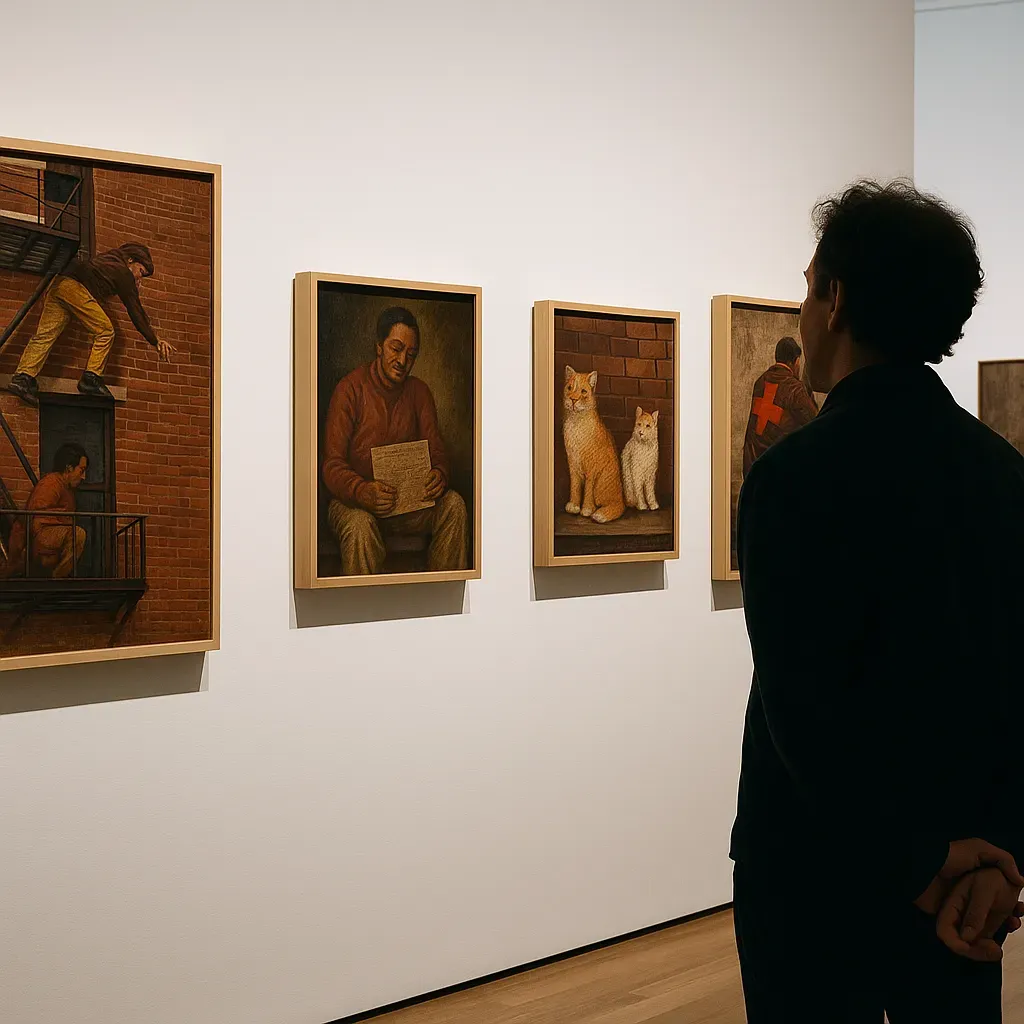
Tucked away at Wrightwood 659 in Chicago is a compelling exhibition showcasing the impactful work of Martin Wong, a self-taught artist of Chinese-American descent. Known for capturing the gritty realities of the Lower East Side and highlighting his Asian and Latino contemporaries, Wong's show titled "Chinatown USA" features over 100 paintings, sculptures, drawings, and photographs, including 11 never-before-exhibited works. This marks the first major institutional retrospective of Wong’s work in nearly a decade.
The exhibition focuses on Wong’s dual connection to the two Chinatowns he knew intimately: San Francisco, where he was raised, and New York, where he lived from 1978 to 1994. Among the works displayed is a painting depicting the iconic pagoda building at 241 Canal Street in New York, reflecting both nostalgia and cultural significance. Wong’s art embraces a variety of themes, including cultural events like the Chinese New Year, the vibrancy of graffiti artists, and the spirit of Puerto Rican poets, emphasizing his deep connection to the communities that shaped his experience.
In conjunction with this Chicago exhibition, an additional show, “Martin Wong: Popeye,” recently closed at P.P.O.W Gallery in New York, marking Wong's first solo exhibition there in a decade. This showcase included whimsical cutout paintings that brought the character Popeye to life with motorized elements, further underscoring Wong’s ability to blend nostalgia with innovative artistry.
Wong’s work is not only gaining institutional recognition but is also becoming a hot commodity in the art market. A monumental painting titled Tai Ping Tien Kuo (Tai Ping Kuo), which had remained unseen for nearly four decades, recently fetched significant attention at Art Basel Miami Beach in 2025, with an asking price of $1.6 million. This piece, rich with references to Wong’s Asian American heritage, has since become part of the Wrightwood exhibition, further amplifying his cultural dialogue.
The exhibition at Wrightwood is particularly unique due to its physical space, designed by architect Tadao Ando. It allows the placement of Wong’s artworks, which often reflect urban life, astrology, American Sign Language, and skate culture, against brick walls that mirror the themes within his pieces, creating a dynamic interplay between art and environment.
Curator Yasufumi Nakamori, alongside assistant curator Ashley Janke, has compiled a treasure trove of works, generously borrowed from prestigious institutions like the Metropolitan Museum of Art and the San Francisco Museum of Modern Art. The collection has garnered attention not only for its artistic merit but also for the poignant themes surrounding identity and cultural representation woven throughout Wong’s career.
Historically, Wong hesitated to exhibit his Chinatown-themed works due to a fear of stereotyping, influenced by parental advice. However, in a landmark 1992 exhibition titled "Chinatown USA," Wong declared, "This is an American Chinatown," encapsulating his desire to present a vibrant and authentic interpretation of his heritage without the confines of kitsch.
“Martin Wong: Chinatown USA” will remain open at Wrightwood 659 through July 18, 2026, offering art lovers a rare opportunity to delve into the life and work of one of America's significant contemporary artists. This exhibition not only serves as a celebration of Wong's artistic legacy but also as a significant dialogue about cultural identity in the art world, nurturing a deeper understanding of both personal and communal experiences.
Gracias por leer Columna Digital, puedes seguirnos en Facebook, Twitter, Instagram o visitar nuestra página oficial. No olvides comentar sobre este articulo directamente en la parte inferior de esta página, tu comentario es muy importante para nuestra área de redacción y nuestros lectores.
Datos basados en información reportada originalmente por artnews.com.
Reportar un problema en esta notaPolítica de correcciones


Deja un comentario