

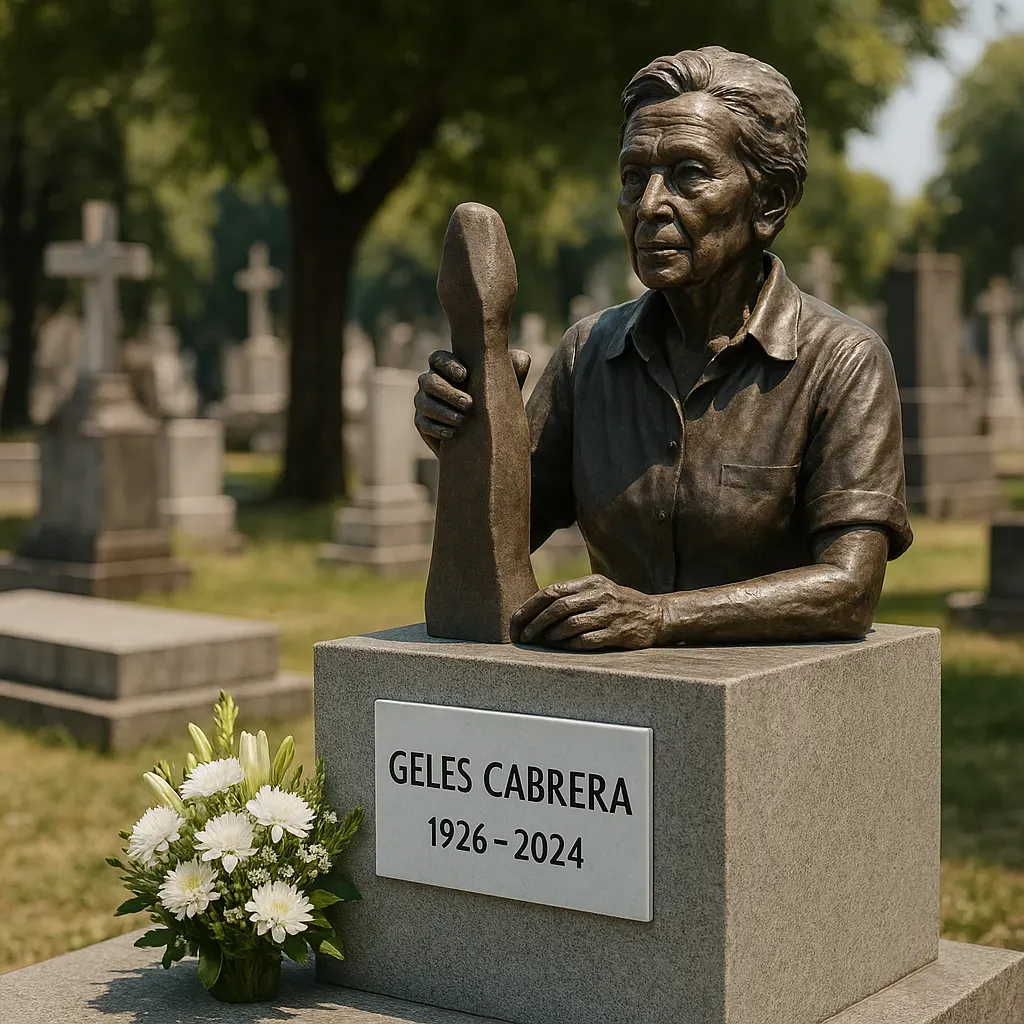
Mexican artist Geles Cabrera, recognized as her nation's first professional female sculptor and a key figure of the Generación de la Ruptura, passed away on September 1, 2026, at the remarkable age of 100. Her contributions to the art world spanned over seven decades, during which she developed a sculptural practice characterized by abstracted, voluptuous forms, often crafted from rough volcanic stone. Through her innovative approach, Cabrera paved the way for younger generations of modern and contemporary Mexican artists, earning accolades as a relentless promoter of their work.
As a pioneer in a field traditionally dominated by men, Cabrera faced immense challenges. Despite achieving early recognition—becoming the first Mexican sculptor to hold a solo exhibition at the Mont-Orendáin Gallery at just 22 years old in 1949—significant acknowledgment from leading art institutions came much later in her life. The National Institute of Fine Arts and Literature in Mexico City, which later honored her contributions, stated, "It is with deep sadness that we pay tribute to Geles Cabrera… a pioneer of modern sculpture in Mexico.”
Cabrera's artistic journey was deeply influenced by her upbringing. Born Ángeles María Cabrera Alvarado in 1926, her father was a civil engineer involved in archaeological excavations, exposing her to ancient sculptural forms that left a lasting impression. She pursued art through the San Carlos Academy and later the San Alejandro Academy in Cuba, where she began to exhibit and gather accolades.
Overcoming the sexist barriers of her time, Cabrera co-founded the Salón de la Plástica Mexicana in 1949, aimed at promoting modern Mexican art. She also opened the Museo Escultórico in Coyoacán in 1966, the country’s first independent artist-run museum by a living artist, operating it without admission fees until 2006. Cabrera's commitment to art extended beyond her own work, as she supported the museum, exhibiting over 50 of her pieces and showcasing fellow sculptors.
Her choice of materials was integral to her artistic expression. Preferencing black or gray porous volcanic stone, she valued the raw, tactile quality of her sculptures, often eschewing polished finishes. "I left them like that on purpose. I don’t like to polish them," she stated in a 2018 interview, emphasizing her distinct approach.
Cabrera's abstract style set her apart from contemporaneous nationalist motifs and aligned her with the Generación de la Ruptura, a movement founded in the 1950s. Additionally, she participated in the GUCADIGOSE collective, collaborating with notable artists like Angela Gurría and Mathias Goeritz.
Recognition in her later years culminated in significant exhibitions, including a solo showcase in the United States at the Americas Society in 2022, and a retrospective at the Museo del Palacio de Bellas Artes in 2025. Before her passing, she was awarded the Medal for Fine Arts in 2023, a testament to her enduring impact on the arts.
Cabrera’s legacy persists, illustrating the importance of resilience and the need for diverse voices in artistic expression. Her life and work continue to inspire current and future generations in the ever-evolving landscape of art.
Gracias por leer Columna Digital, puedes seguirnos en Facebook, Twitter, Instagram o visitar nuestra página oficial. No olvides comentar sobre este articulo directamente en la parte inferior de esta página, tu comentario es muy importante para nuestra área de redacción y nuestros lectores.
Datos basados en información reportada originalmente por artnews.com.
Reportar un problema en esta notaPolítica de correcciones
Deja un comentario